January 13, 2026
Come Alive Outside Design Challenge connects students, community and industry
By Julissa Litterick
LO Training Coordinator (Career Advancement Program) & Youth Engagement Specialist
While addressing a gathering of horticulture professionals, students and educators, Scott Wentworth, landscape architect of Wentworth Landscapes, kicked off the 2025 Come Alive Outside Design Challenge by asking a simple question: “What is your favourite childhood memory?” Wentworth’s intention was to demonstrate how often nature is involved in shaping our most vivid memories.
Since 2013, the Come Alive Outside Design Challenge has connected post-secondary and secondary students with landscape professionals to design and build outdoor educational spaces at various schools and childcare centres. Although the format has evolved over time, its objective remains the same: create outdoor spaces that invite children to connect with nature.
The Challenge also provides real-world experience for landscape design students to put their studies into practice with guidance from seasoned landscape professionals. Divided into small teams, the student designers compete to translate the needs of elementary students and the local community into designs that reimagine schoolyards as biodiverse ecosystems and living laboratories. The winning design is then installed at the school with the generous support of landscape contractors and suppliers.
The 2025 Come Alive Outside Design Challenge was held Nov. 5-6, 2025, in Niagara Falls, Ont., with the goal of creating a naturalized playground and teaching space at James Morden Elementary School. The cohort included teachers and students from James Morden Elementary School and Westlane Secondary School, volunteers and staff from Landscape Ontario (LO), industry members, and faculty and post-secondary students from Niagara College and Niagara Parks School of Horticulture.
When addressing the latest cohort of student designers, Wayne Wakal, an educator at Niagara College, urged the designers to give the elementary students' ideas, no matter how outlandish, the respect and reverence usually reserved for distinguished clients. “Your task is to design a garden worthy of their curiosity.”
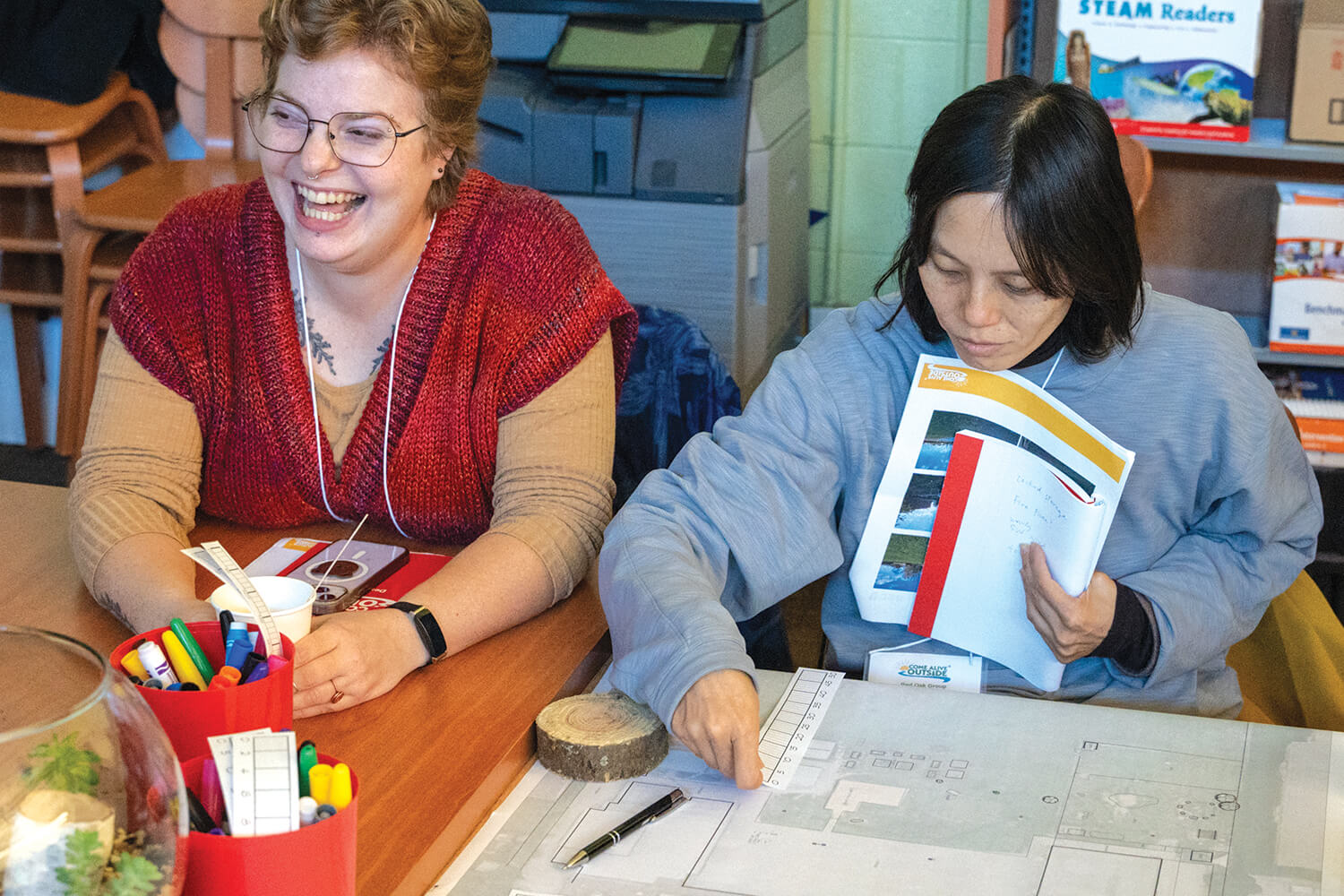

“James Morden is surrounded by development. The site lines are a bigger consideration and challenge for this year’s designers than for sites in previous years,” said Carrie Zimmerman, program coordinator and instructor at Niagara College. The grounds were clearly not a comfortable place to learn and play with the lack of privacy and exposure to both elements and the prying eyes of the surrounding development.
The student designers also engaged with industry volunteers stationed around the schoolyard who offered advice on different aspects of the design process. The design teams learned to imagine which hardscaping and softscaping elements could improve the school yard’s ecological and educational value, while also addressing site conditions, safety concerns and maintenance requirements. At the Plant Inventory Station, for example, experts from Gauld Nurseries and LO helped students generate ideas for specific plants that could provide screening, shade and sustenance.
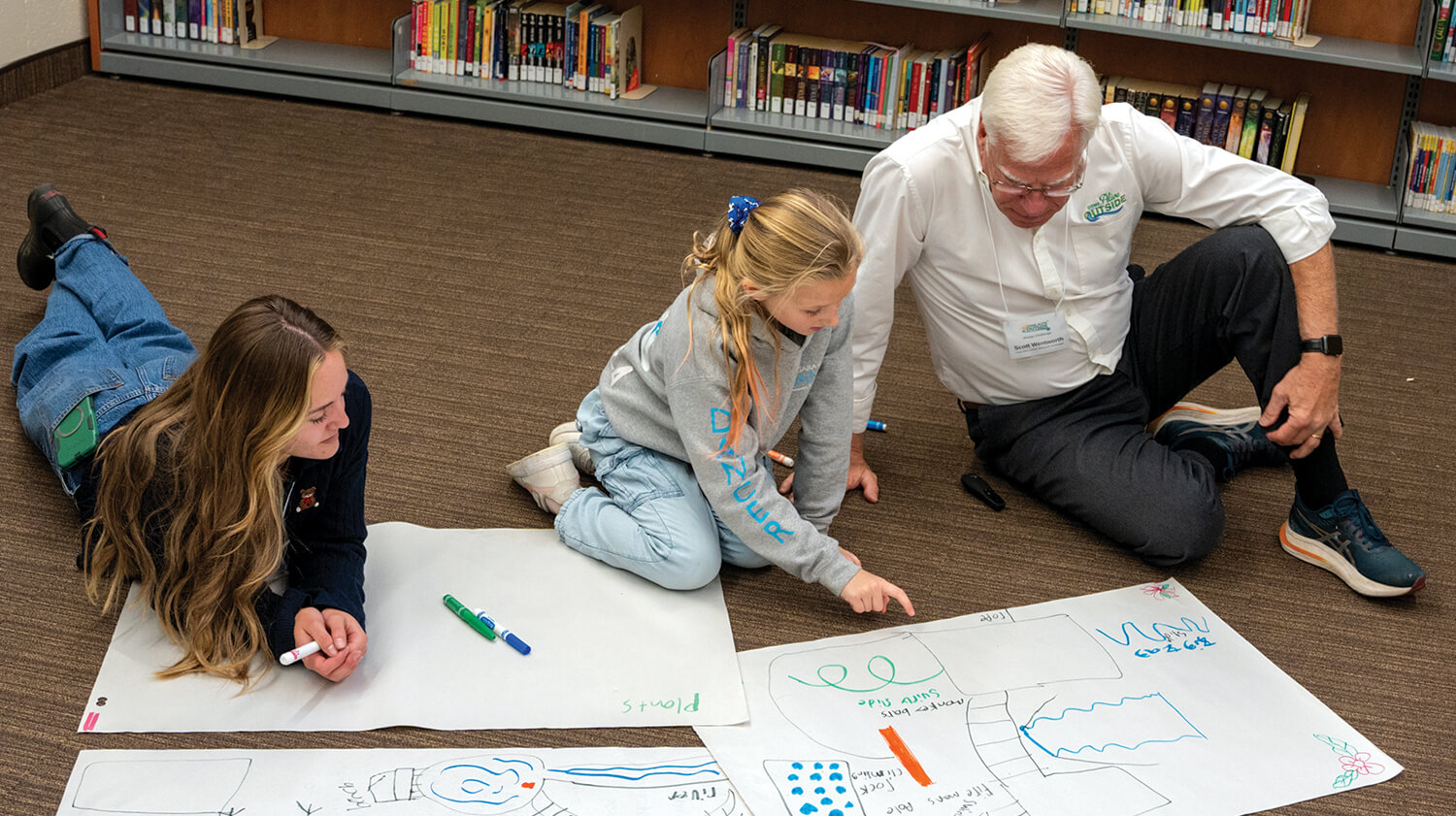
After the site analysis, the teams reconvened in the library to gather input from their clients: the students of James Morden Elementary. Capturing the ideas of a few clients in a single design is difficult for any new designer, but distilling the dreams of 30 or more children into one schoolyard becomes the real challenge.
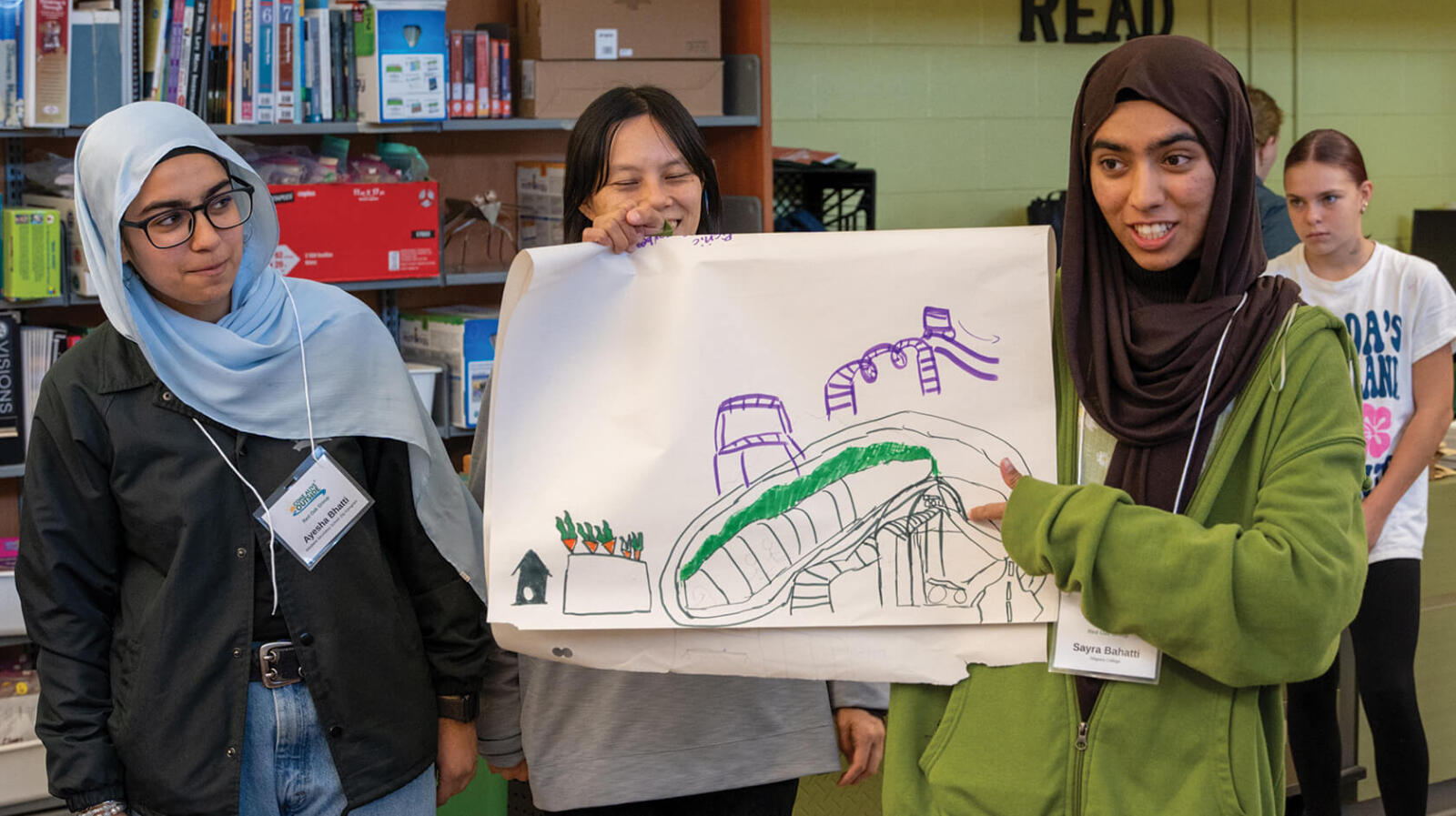
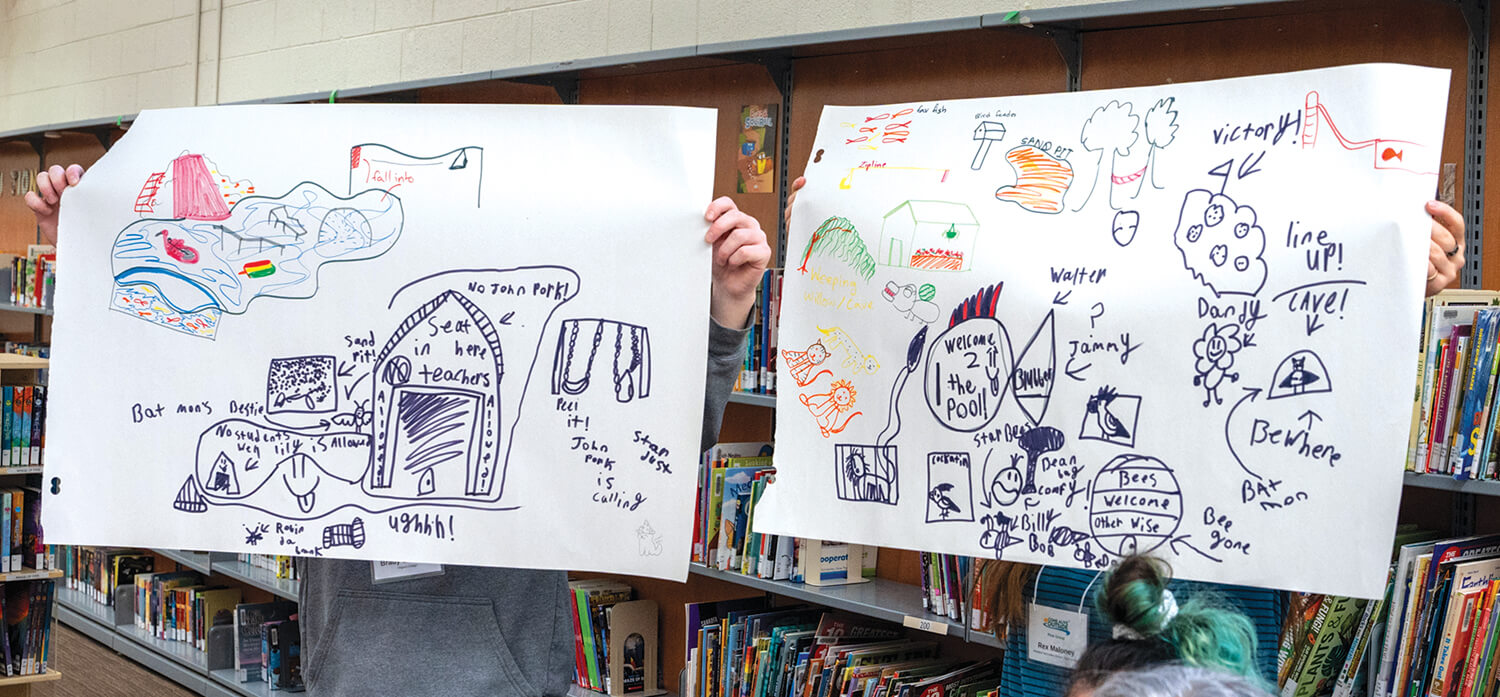
For a few hours, teams of students of all ages mapped out the school yard and brainstormed ideas for their new outdoor learning spaces. Design teams then helped the elementary students present their ideas to the entire group. A crowd favourite was themed “Buddy Benches” — seating to invite friendship building, decorated with images of friendships found in popular media, like Spongebob and Patrick.
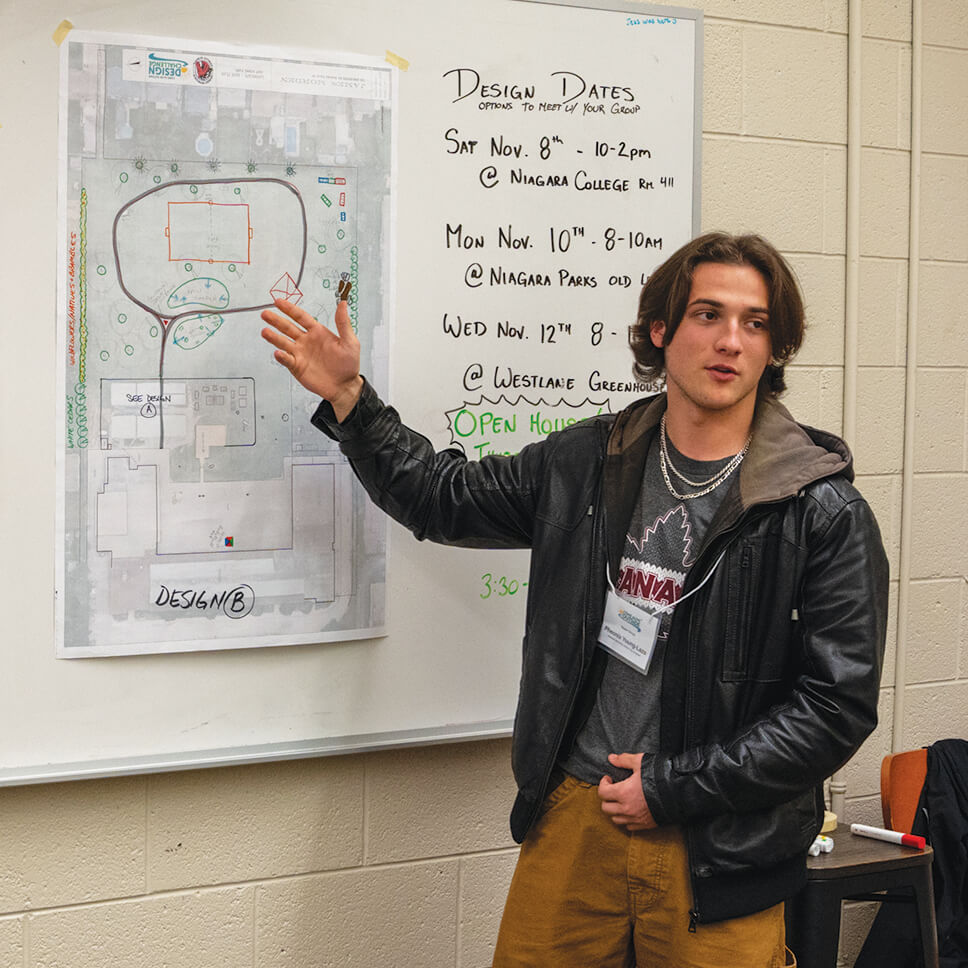
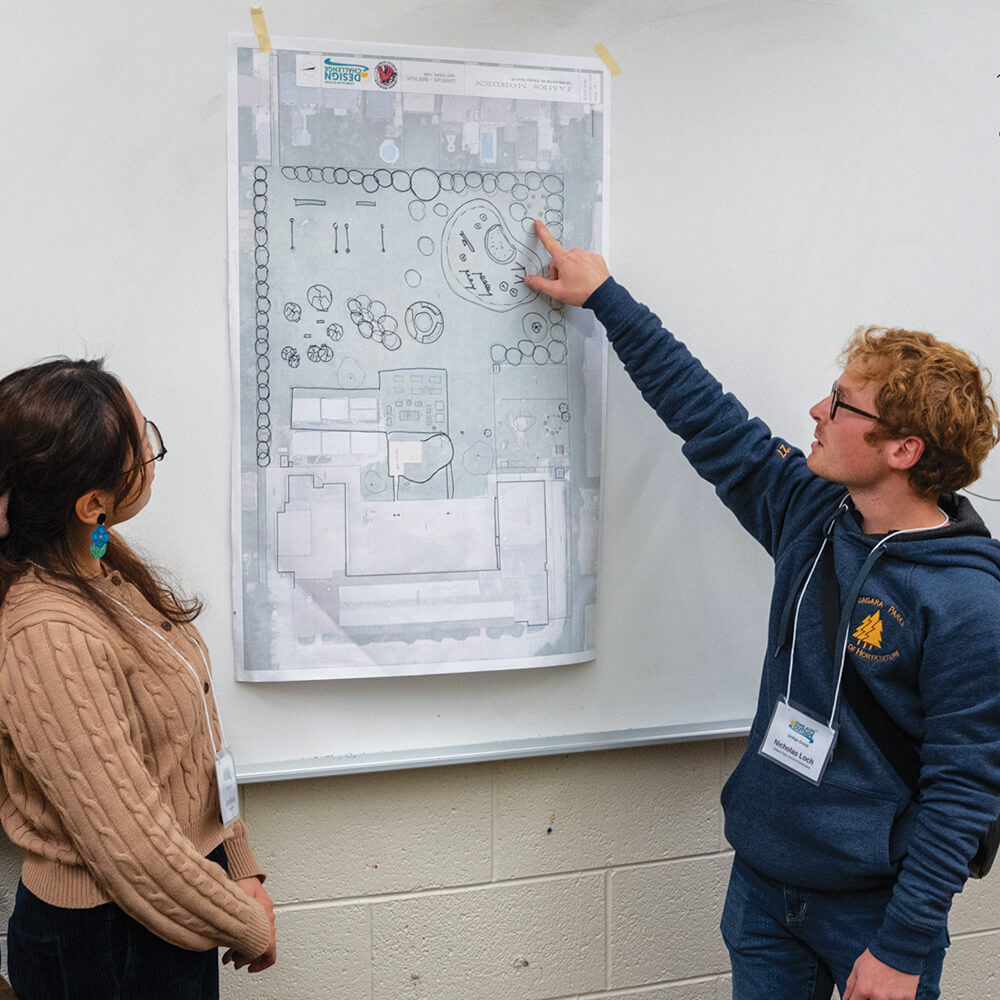
After receiving input from the James Morden students, the design teams spent the remainder of charrette translating the children’s dreams into the practical reality of a functional diagram. The day closed with brief presentations and final remarks from industry experts and the Come Alive Outside team. The designers were then given a week to finalize their designs and draft a preliminary plan to present at a community open house. Finally, armed with feedback from students, teachers, parents and the wider James Morden community, the design teams worked to create full design plans for the future of the school’s gardens.

“But what drew us to [Come Alive Outside], was the community partnerships. It's so James Morden of us to have community partners.”
Tkach became interested in gardening when she applied for a school garden grant four years ago. As the garden has grown, so has the wealth of hands-on, interdisciplinary learning opportunities available to the James Morden students, as well as the impact on the local community. The abundance of fresh produce from the gardens not only supports the school’s culinary club, it also feeds the neighbourhood. The gardens are equity in practice.
As the teacher championing the Come Alive Outside Design Challenge at James Morden, Tkach is excited to see how her students’ creativity will inform the final designs and grow the future of the gardens. “Student-led and student-driven is what makes [Come Alive Outside] special… elevated is the best way to describe it,” Tkach said.
The Challenge also profoundly impacted the student designers. “It struck me how creative the [James Morden students] were. It’s impactful to interact with the people the design will affect,” noted Hayden Cootes, one of the post-secondary student designers. And for their teachers, it’s an opportunity to step back and let their students’ creativity shine. For Rose Walters, who has participated both as a student and industry volunteer in past challenges, it’s a full circle moment to return not as a designer, but as faculty supporting the students’ creative process.
If you would like to get involved in the Come Alive Outside Design Challenge or help bring it to your community, please reach out to Julissa Litterick at jlitterick@landscapeontario.com or Christy Sebastian at csebastian@landscapeontario.com.
LO Training Coordinator (Career Advancement Program) & Youth Engagement Specialist
While addressing a gathering of horticulture professionals, students and educators, Scott Wentworth, landscape architect of Wentworth Landscapes, kicked off the 2025 Come Alive Outside Design Challenge by asking a simple question: “What is your favourite childhood memory?” Wentworth’s intention was to demonstrate how often nature is involved in shaping our most vivid memories.
Since 2013, the Come Alive Outside Design Challenge has connected post-secondary and secondary students with landscape professionals to design and build outdoor educational spaces at various schools and childcare centres. Although the format has evolved over time, its objective remains the same: create outdoor spaces that invite children to connect with nature.
The Challenge also provides real-world experience for landscape design students to put their studies into practice with guidance from seasoned landscape professionals. Divided into small teams, the student designers compete to translate the needs of elementary students and the local community into designs that reimagine schoolyards as biodiverse ecosystems and living laboratories. The winning design is then installed at the school with the generous support of landscape contractors and suppliers.
The 2025 Come Alive Outside Design Challenge was held Nov. 5-6, 2025, in Niagara Falls, Ont., with the goal of creating a naturalized playground and teaching space at James Morden Elementary School. The cohort included teachers and students from James Morden Elementary School and Westlane Secondary School, volunteers and staff from Landscape Ontario (LO), industry members, and faculty and post-secondary students from Niagara College and Niagara Parks School of Horticulture.
A design worthy of their curiosity
The Challenge always starts with a kick-off dinner where post-secondary and secondary students are introduced to the school and industry partners. The student designers are encouraged by their faculty and industry advisors to delve into the “why” behind the challenge, as well as the impact their designs will have on the school and the wider community.When addressing the latest cohort of student designers, Wayne Wakal, an educator at Niagara College, urged the designers to give the elementary students' ideas, no matter how outlandish, the respect and reverence usually reserved for distinguished clients. “Your task is to design a garden worthy of their curiosity.”
The charrette
The following morning the ensemble of student designers and industry volunteers assembled in the library at James Morden Elementary. Grouped into design teams, the student designers were released into the schoolyard to complete their initial site inventory. As the student designers walked the school grounds, they immersed themselves in the experience of the elementary students and teachers at James Morden. They took note of the flat, soggy turf and the distinct absence of tree cover.“James Morden is surrounded by development. The site lines are a bigger consideration and challenge for this year’s designers than for sites in previous years,” said Carrie Zimmerman, program coordinator and instructor at Niagara College. The grounds were clearly not a comfortable place to learn and play with the lack of privacy and exposure to both elements and the prying eyes of the surrounding development.
The student designers also engaged with industry volunteers stationed around the schoolyard who offered advice on different aspects of the design process. The design teams learned to imagine which hardscaping and softscaping elements could improve the school yard’s ecological and educational value, while also addressing site conditions, safety concerns and maintenance requirements. At the Plant Inventory Station, for example, experts from Gauld Nurseries and LO helped students generate ideas for specific plants that could provide screening, shade and sustenance.
After the site analysis, the teams reconvened in the library to gather input from their clients: the students of James Morden Elementary. Capturing the ideas of a few clients in a single design is difficult for any new designer, but distilling the dreams of 30 or more children into one schoolyard becomes the real challenge.
For a few hours, teams of students of all ages mapped out the school yard and brainstormed ideas for their new outdoor learning spaces. Design teams then helped the elementary students present their ideas to the entire group. A crowd favourite was themed “Buddy Benches” — seating to invite friendship building, decorated with images of friendships found in popular media, like Spongebob and Patrick.
After receiving input from the James Morden students, the design teams spent the remainder of charrette translating the children’s dreams into the practical reality of a functional diagram. The day closed with brief presentations and final remarks from industry experts and the Come Alive Outside team. The designers were then given a week to finalize their designs and draft a preliminary plan to present at a community open house. Finally, armed with feedback from students, teachers, parents and the wider James Morden community, the design teams worked to create full design plans for the future of the school’s gardens.
The impact
When Lissa Schoot Uiterkamp, teacher at Westlane Secondary School and long-time representative of Come Alive Outside, first reached out to encourage the faculty at James Morden Elementary School to apply for the challenge, staff were skeptical. “It was hard to fathom the scope of the project… or how this project would come alive financially,” said Rochell Tkach, grade 7 teacher at James Morden Elementary.“But what drew us to [Come Alive Outside], was the community partnerships. It's so James Morden of us to have community partners.”
Tkach became interested in gardening when she applied for a school garden grant four years ago. As the garden has grown, so has the wealth of hands-on, interdisciplinary learning opportunities available to the James Morden students, as well as the impact on the local community. The abundance of fresh produce from the gardens not only supports the school’s culinary club, it also feeds the neighbourhood. The gardens are equity in practice.
As the teacher championing the Come Alive Outside Design Challenge at James Morden, Tkach is excited to see how her students’ creativity will inform the final designs and grow the future of the gardens. “Student-led and student-driven is what makes [Come Alive Outside] special… elevated is the best way to describe it,” Tkach said.
The Challenge also profoundly impacted the student designers. “It struck me how creative the [James Morden students] were. It’s impactful to interact with the people the design will affect,” noted Hayden Cootes, one of the post-secondary student designers. And for their teachers, it’s an opportunity to step back and let their students’ creativity shine. For Rose Walters, who has participated both as a student and industry volunteer in past challenges, it’s a full circle moment to return not as a designer, but as faculty supporting the students’ creative process.
Imagining futures
The winning designs are expected to be announced in the winter of 2026 with construction commencing the following year. But collaboration between the communities from both the post-secondary schools and James Morden will not end with the Design Challenge. When asked how the experience could impact the future of learning at Niagara College, Zimmerman said, “We’d love to see a long-term relationship between the college and James Morden. It’s nice to see the trees we grow in our nurseries out into the community.”If you would like to get involved in the Come Alive Outside Design Challenge or help bring it to your community, please reach out to Julissa Litterick at jlitterick@landscapeontario.com or Christy Sebastian at csebastian@landscapeontario.com.